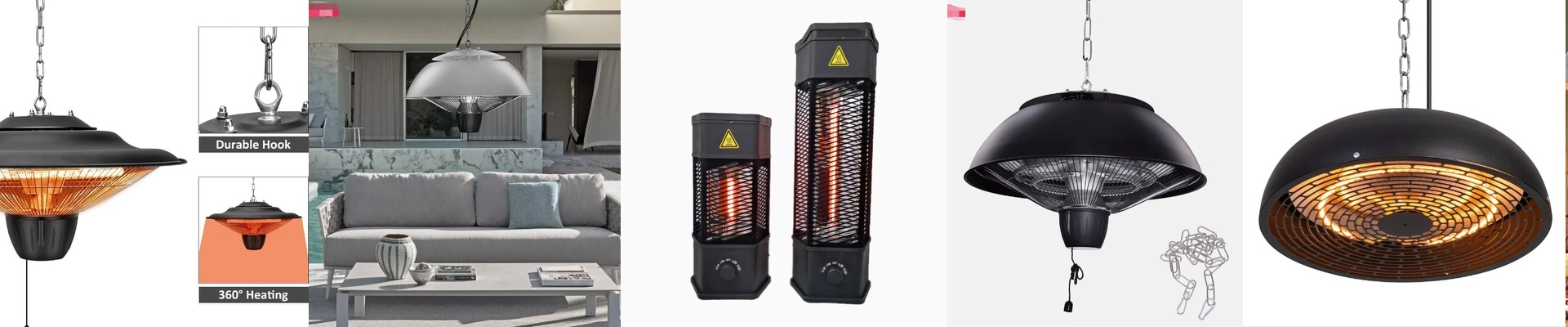

How to Actually Pick the Right Infrared Heater for Your Bathroom
Let’s be honest: nobody likes stepping out of a hot shower and hitting a wall of freezing air. It kills the mood and makes you rush to get dressed. If you’re looking at infrared heaters to fix this, the first thing to understand is that you aren’t just warming up the air in the room. You’re warming up you and the surfaces around you. It’s a different kind of heat. Getting the power right You don’t want to just grab the most powerful heater on the shelf. If you do, you’ll end up wasting electricity or, worse, feeling like you’re standing too close to a campfire. For a tiny powder room (under 4m²), keep it simple. Something between 400W and 600W is plenty. Any more than that and you’ll turn the room into a sauna in about two minutes. If you’ve got a standard full bath (4m² to 8m²), you’ll probably want 800W to 1200W. Tiled walls are notorious for sucking the heat out of a room, so you need a bit more punch to fight that chill. Then there are the big master baths or wet rooms. If you’re over 8m², you’re looking at 1500W. But here’s a pro tip: instead of one giant, scorching heater, try a few smaller units spread out. It stops those annoying cold spots from popping up in the corners. Why IP65 matters (and how it feels) Bathrooms are wet. Steam everywhere. That’s why you need an IP65 rating. In plain English? It means dust can’t get in and a few splashes of water won’t blow a fuse or cause a disaster. It’s peace of mind. The magic happens with the short-wave infrared element. Unlike those old-school heaters that take forever to warm the air, these hit your skin directly. You feel the warmth the second you flip the switch. Even if there’s a draft coming from a window, you’ll still feel cozy. The balance of comfort It’s tempting to go for the highest wattage for a “fast” warm-up. But be careful. If you put a 1500W lamp in a tiny 3m² space, you’ll get “hot spots.” You’ll feel scorched in one spot while your toes are still freezing. It’s a weird, uncomfortable feeling. Stick to a balanced layout. And while you’re at it, just double-check that your wiring can handle the load. There’s nothing worse than the power tripping right in the middle of your morning routine.