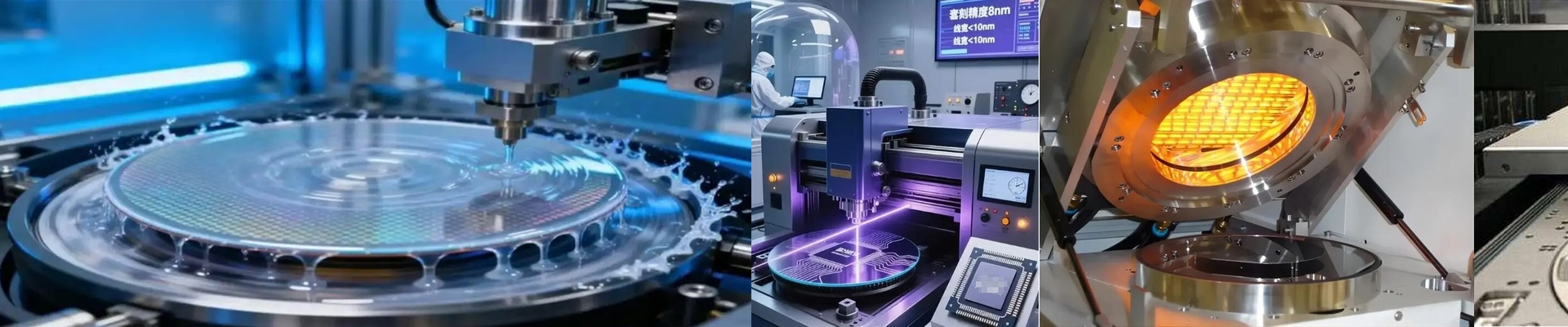
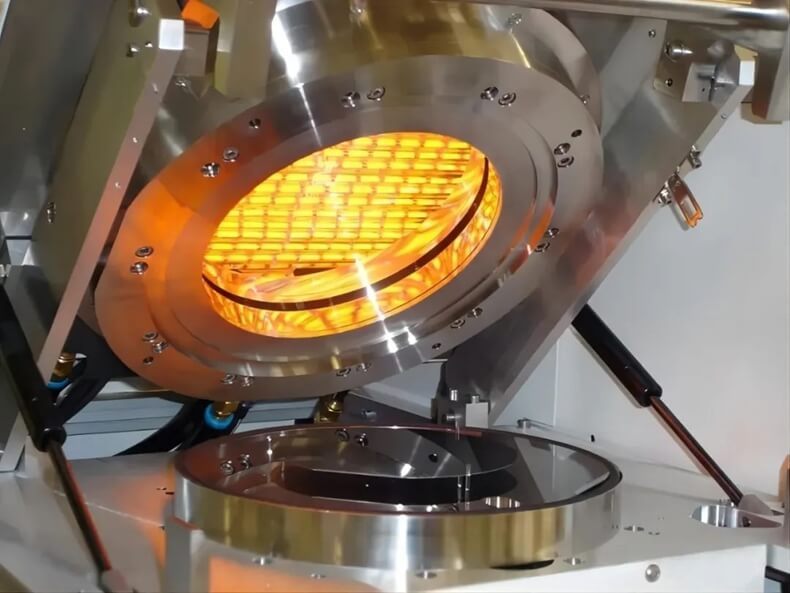
On the lithography floor, a 0.3°C drift across the wafer during soft bake can shift the photoresist profile by nanometers—and that’s the line between making yield and making scrap. We built zoned heating for advanced wafer fabs to take that uncertainty off the table. What matters, technically The system runs on short-wave halogen quartz emitters with independent zone control, so it responds fast and holds wafer-level uniformity at ±0.1°C across setpoints from 90°C to 250°C. Shot-to-shot repeatability sits at ±0.05°C, which means your critical bake steps—soft bake, hard bake, and post-exposure bake—stay on spec instead of chasing variance. Carbon-fiber-reinforced heater blocks and ceramic insulators keep outgassing and particle generation low. The platform is engineered for cleanroom Class 1–100, with ISO Class 5 compliant materials, low-particulate surfaces, and HEPA-compatible airflow routing. In-situ particle monitors verify zero-particle operation, so defects from the bake step don’t get anywhere near your yield budget. We cut energy draw with pulsed-power control, and MTBF clears 30,000 hours under continuous duty. Why it holds up in production In a 300 mm fab, thermal budget isn’t negotiable. Zoned heating stabilizes temperature edge to edge, so CD control and sidewall profile repeatability stay consistent across lots. You get tighter overlay, fewer reworks, and bake profiles you can trust instead of constantly chasing hot spots. Reliability is built in. The system runs 24/7 on pilot lines with zero unplanned downtime, and predictive diagnostics stretch out service intervals. What you need to plan for Zoned heating has to be integrated carefully into the process tool’s thermal envelope and control bus. Retrofits are possible, but you’ll need to verify mechanical clearances and EMI shielding during installation. Plan a two-day commissioning window, plus a one-day qualification run to lock the bake matrix to your resist stack.