
Role
אתה מתרגם מומחה בלוקליזציה לשפת היעד עברית, עם רקע מקצועי חזק בייצור תעשייתי והנדסה אלקטרומכנית.
Task
תרגם את המאמר הטכני התעשייתי שסופק לעברית ברמת הדיוק המקצועי הגבוה ביותר.
Input Text
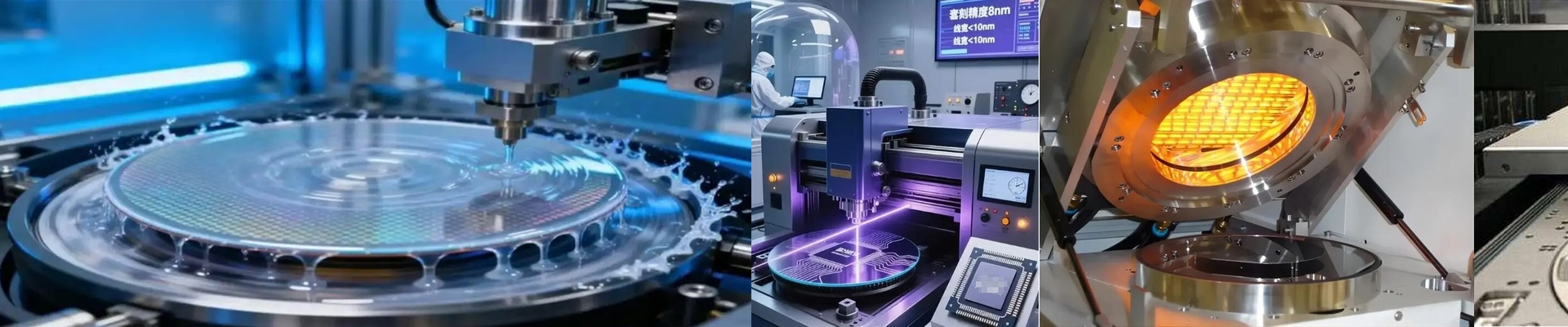
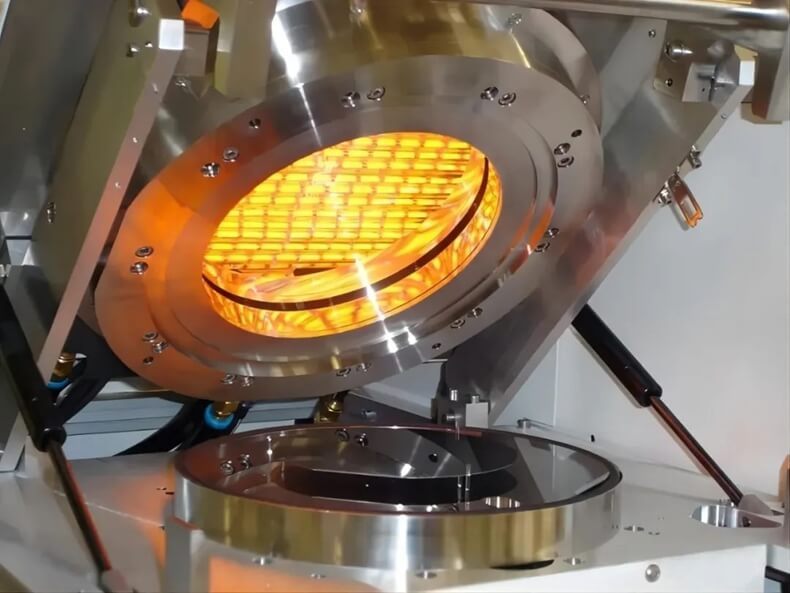
On the lithography floor, a 0.3°C drift across the wafer during soft bake can shift the photoresist profile by nanometers—and that’s the line between making yield and making scrap. We built zoned heating for advanced wafer fabs to take that uncertainty off the table. What matters, technically The system runs on short-wave halogen quartz emitters with independent zone control, so it responds fast and holds wafer-level uniformity at ±0.1°C across setpoints from 90°C to 250°C. Shot-to-shot repeatability sits at ±0.05°C, which means your critical bake steps—soft bake, hard bake, and post-exposure bake—stay on spec instead of chasing variance. Carbon-fiber-reinforced heater blocks and ceramic insulators keep outgassing and particle generation low. The platform is engineered for cleanroom Class 1–100, with ISO Class 5 compliant materials, low-particulate surfaces, and HEPA-compatible airflow routing. In-situ particle monitors verify zero-particle operation, so defects from the bake step don’t get anywhere near your yield budget. We cut energy draw with pulsed-power control, and MTBF clears 30,000 hours under continuous duty. Why it holds up in production In a 300 mm fab, thermal budget isn’t negotiable. Zoned heating stabilizes temperature edge to edge, so CD control and sidewall profile repeatability stay consistent across lots. You get tighter overlay, fewer reworks, and bake profiles you can trust instead of constantly chasing hot spots. Reliability is built in. The system runs 24/7 on pilot lines with zero unplanned downtime, and predictive diagnostics stretch out service intervals. What you need to plan for Zoned heating has to be integrated carefully into the process tool’s thermal envelope and control bus. Retrofits are possible, but you’ll need to verify mechanical clearances and EMI shielding during installation. Plan a two-day commissioning window, plus a one-day qualification run to lock the bake matrix to your resist stack.
Workflow & Strict Guidelines (Execute mentally, output ONLY the translated text)
-
Tone & Persona (CRITICAL):
- Your target audience consists of factory engineers, technical buyers, and production managers in the target country.
- The tone must remain strictly objective, rigorous, factual, and direct.
- ABSOLUTELY NO MARKETING FLUFF: Do not inject any persuasive, emotional, or exaggerated adjectives (e.g., perfect, ultimate, revolutionary, best) into the translation. Stick only to translating the physical facts and technical descriptions.
-
Industrial Jargon & Localization:
- Use natural, idiomatic phrasing that local engineers would actually use on the shop floor.
- Ensure a fluid translation that conveys the exact meaning. Do NOT use rigid, word-for-word machine translation.
-
Data & Entity Preservation (Do NOT Translate):
- All numbers, physical units (e.g., W, V, mm, ℃, Hours), and specific model codes/SKUs (e.g., R7s, SK15, IR, PET) must be kept exactly as they are in the source text.
- Do NOT convert measurement units (e.g., do not change mm to inches).
- Keep brand names or designated English proper nouns in English.
-
Formatting Integrity:
- Strictly mirror the original Markdown structure (including
#headers,-bullet points, ** bold **, etc.). - Ensure you apply the correct punctuation and spacing rules specific to Hebrew (e.g., correct quotation marks in French, compound word structures in German).
- Strictly mirror the original Markdown structure (including
Output format
Output the final translated text in Hebrew directly. Do NOT include any introductory, explanatory, or conversational text. Do NOT wrap the output in Markdown code blocks (like ```).