The Secret to Better Semiconductor Curing: Gold-Coated IR Lamps
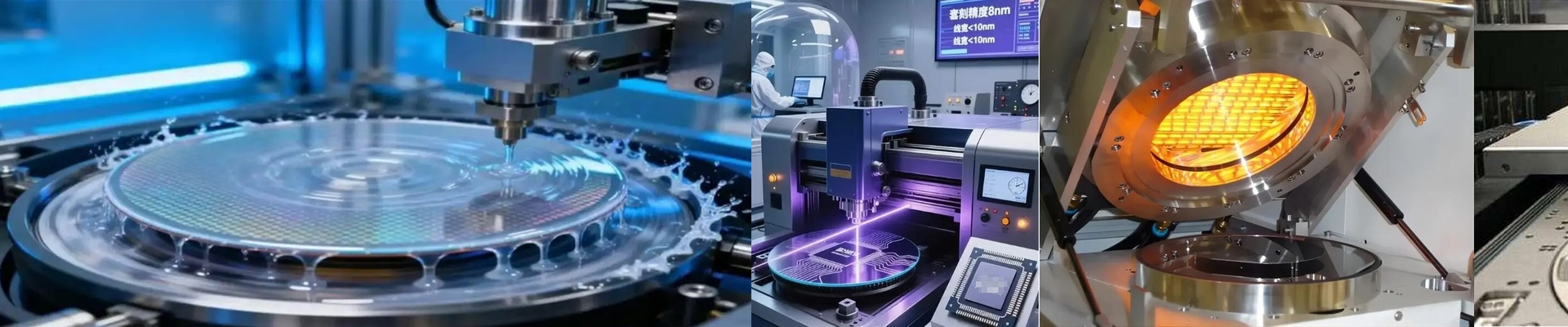
The industry is pushing hard for lead-free, eco-friendly curing. That’s great, but it creates a headache for the people actually running the machines. Most shops still rely on convection ovens, which are basically giant heaters that waste a ton of energy just to warm up the air in the room. It’s inefficient. That’s why we’ve moved toward gold-coated infrared (IR) lamps. Instead of heating the air, we point the energy right at the substrate. Direct. Fast. Simple.
Why bother with the gold?
If you use a standard quartz lamp, you get a broad spectrum of radiation. The problem is that for semiconductor curing, you can’t just blast everything with heat. If you do, you risk scorching the wafer. You need specific wavelengths that can actually get through the photoresists or adhesives. So, we put a thin layer of gold on the quartz envelope. Think of it as a filter. It bounces the unwanted long-wave radiation back into the filament and pushes the energy into the short-wave IR band. This means more heat actually hits the workpiece. Your ramp-up times drop, and your curing station doesn’t turn the whole room into a sauna.
The trade-off
Now, here’s the catch. These lamps pack a massive punch. Because the heat density is so high, it puts a lot of pressure on your cooling manifolds. If your airflow isn’t dialed in, the ends of the lamps will just soak up that heat and burn out way too early. You can’t just crank the wattage and hope for the best; you have to make sure your system can actually breathe and move that ambient heat away.
Cleaning up the process
Lead-free solders and adhesives are a different beast. They usually need higher temperatures and much tighter thermal profiles than the old stuff. IR lamps make this easier because you get precise zone control. You can tweak the power to individual lamps, which means no more worrying about “cold spots” on your wafer. Plus, you can finally ditch the solvent-based heating mediums. No VOCs, no nasty combustion byproducts. It’s a clean swap for those old, polluting drying systems. You just wire it up to an SCR controller, set your profile, and let the radiant energy do the heavy lifting.