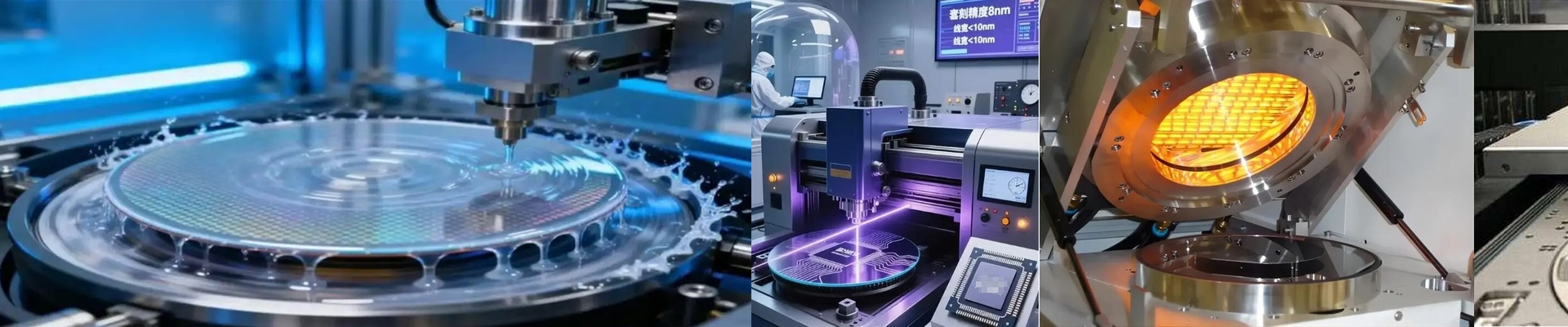

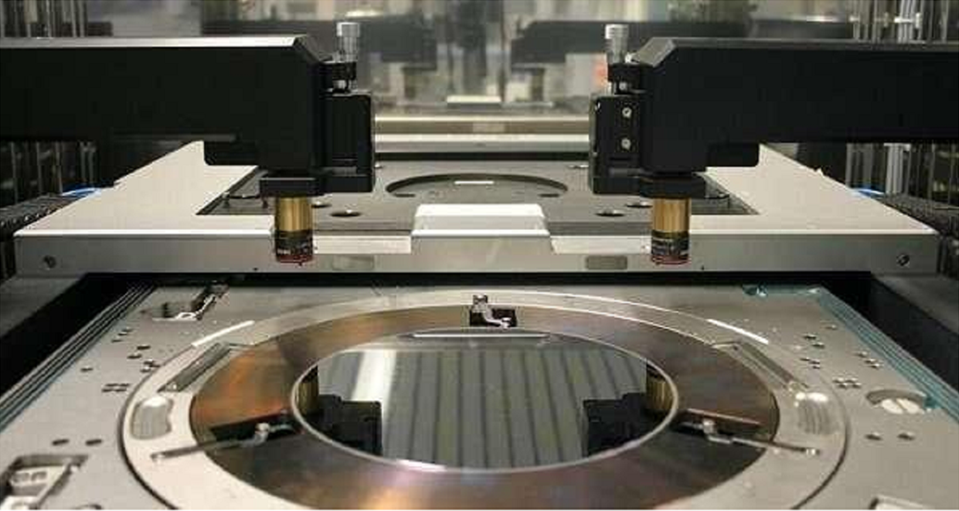
In the packaging fab, two things quietly murder yield: moisture that sticks around after cleaning, and photoresist that didn’t get fully cured. Trapped water turns into popcorn defects when the encapsulant hits heat. Under-baked resist smears during dicing, leaving micro-scratches that snowball into scrap. What you need is a thermal process that pulls the water out without stressing thin films, and sets the resist profile with control you can count on. What matters, technically We run short-wave near-infrared (NIR) emitters with sub-second response, dumping energy straight into the water and the resist film. Across a 300 mm wafer, the system holds uniformity within ±0.1°C, and setpoint repeatability stays at ±0.2°C over thousands of cycles. The hardware is built for cleanroom Class 1–100: particle-minimized design, low outgassing materials, and verified zero particulate generation under standard wafer handling. Particle counts stay below threshold through soft bake, hard bake, and pre-package drying. Why it works in practice NIR dries wafers in seconds, so cycle time drops without sending wafer temperature through the roof. Soft bake stays inside tight thermal budgets, giving consistent line-edge roughness and adhesion. Hard bake locks in stable crosslinking without over-curing, so dicing strength improves and chip-outs drop. The payoff is fewer reworks, predictable yield, and lower energy draw per lot compared to convection ovens. These units run 24/7 with minimal unplanned downtime, backed by continuous output monitoring and modules that swap in fast. Here’s what you need to keep straight NIR needs line-of-sight, and the emitter-to-wafer distance has to be fixed and repeatable to keep uniformity. Temperature control depends on calibrated pyrometry and emissivity tables tuned to the substrate. We provide pre-validated recipes for common films, but new stacks will need a short qualification run to lock the setpoints. Installation is straightforward on standard tracks—just clean power and an isolated ground to keep EMI stable. The bottom line: this is thermal control built for the realities of wafer drying and photoresist processing before packaging—repeatable, clean, and fast.