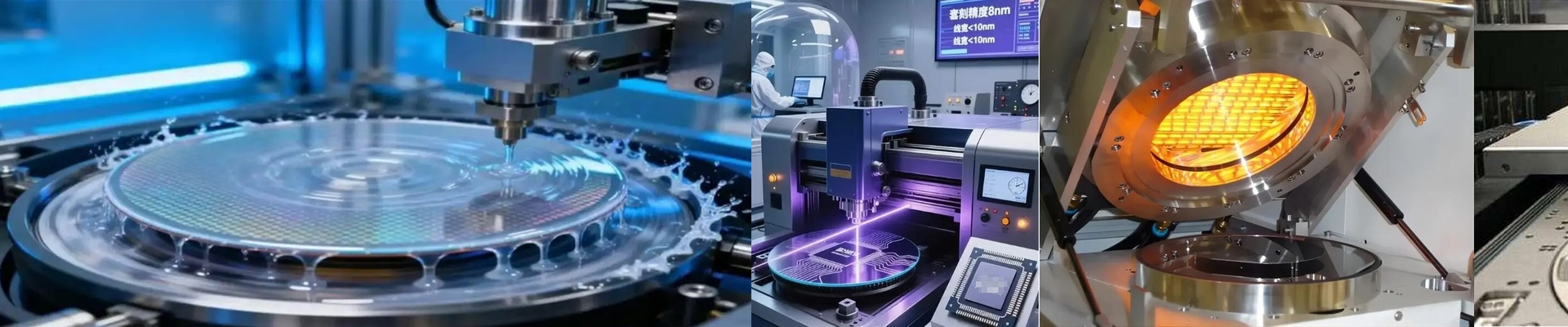
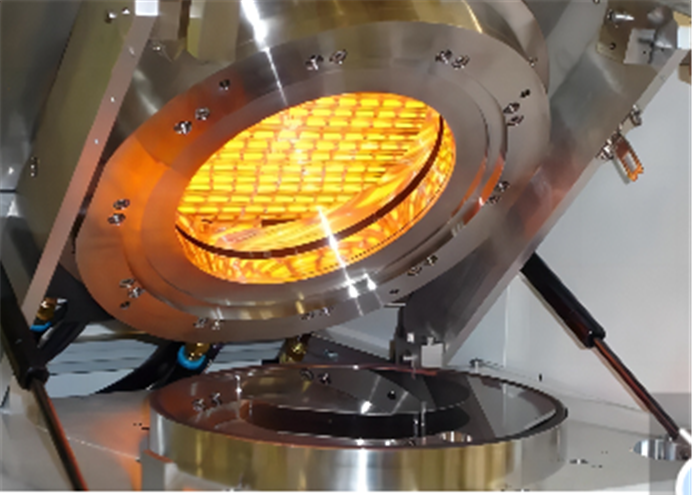
On a 300mm line, a 2°C drift during the photoresist bake won’t throw a red flag. It shows up as linewidth excursions, scrapped lots, and a 7 a.m. yield meeting nobody asked for. Thermal stability isn’t a nice-to-have. It’s the process. What matters under the hood We built these supplies for the lithography thermal budget—soft bake and hard bake, with wafer-level uniformity held to ±0.1°C across the entire run. Quartz-halogen elements give you a predictable radiant profile. NIR options match faster cure kinetics without overshoot. They’re cleanroom-ready for Class 1–100, with zero particle generation verified by in-situ metrology and materials that don’t outgas. Expect 24/7 operation with zero unplanned downtime, backed by life data exceeding 5,000 hours and output drift under 5%. Why this lands in the fab In this business, repeatability is the only acceptable state. Our systems keep temperature setpoints in tight bands, so critical dimension control stays locked and photoresist profiles read the same from lot 100 to lot 10,000. You get stable throughput without thermal-induced rework, lower energy draw from efficient thermal coupling, and fewer consumable swaps thanks to long service life. The payoff: fewer excursions, tighter distributions, and OEE you can count on. The things you’ll want to plan for These are designed to drop straight into standard bake tracks, but thermal coupling shifts with chamber geometry and gas flow. Commissioning means a short qualification run to tune PID and confirm uniformity maps for your exact tool setup. Do that upfront. The return is a bake profile that stays in spec, shift after shift.