

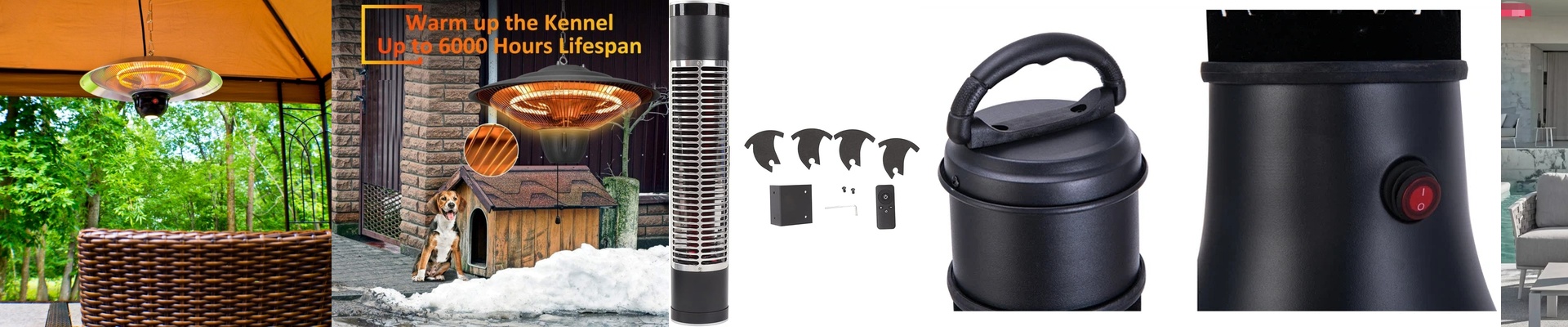



Putting a 1500W infrared heater in a bathroom or a damp gazebo isn’t as simple as just slapping on a waterproof cover. You’re dealing with a lot of power and a lot of moisture—a combination that can get dangerous fast. If your insulation slips up, you’re looking at a ground fault. Not exactly the vibe you want when you’re trying to relax in a warm bath. Here’s the thing about steam. It lowers the air’s resistance, and in a bathroom, that condensation loves to settle right on the heater’s chassis and terminals. With a 1500W unit, any little leak in the current can trigger a short circuit. To stop that from happening, we use reinforced barriers between the heating element and the outer shell. We go with a double-insulated design. That way, even if the first layer of protection fails, the outer casing won’t carry a charge. It’s just safer. As for the materials, we don’t cut corners. We use high-grade quartz glass for the tubes because it can handle the sudden jump in temperature without cracking, and it doesn’t care about humidity. The wiring is just as important. We use silicone or PTFE coatings so the insulation doesn’t get brittle and crack after being heated and cooled a thousand times. And for the terminals? Ceramic. Cheap plastics warp when they get hit with constant steam, which creates tiny gaps where moisture can sneak in. Ceramic just stays put. Now, let’s talk safety. You absolutely need a dedicated Earth ground and a GFCI (Ground Fault Circuit Interrupter) circuit. Think of the internal insulation as your first line of defense and the GFCI as your safety net. But there’s a catch. If you seal the unit too tightly to keep the water out, you might accidentally trap the heat inside. It’s a balancing act. You want it protected, but you still need enough airflow so the internal electronics don’t cook themselves. If you choke the ventilation, you’re just killing the lifespan of the heater.